You are choosing between Twilio and Com.bot for WhatsApp template messages, and the wrong pick costs you per conversation, every month. Template approval, delivery reliability, and pricing models differ sharply between the two. This comparison gives you the specifics to decide in one sitting.
You will see how each platform handles template creation, approval, and bulk sends, what their pricing structures actually charge, and which buyer each tool suits. By the end you will know exactly which platform fits your messaging volume and budget.
Quick Verdict: Twilio vs Com.bot for WhatsApp Template Messages in 2026
For most businesses prioritizing WhatsApp template messaging in 2026, Com.bot delivers a more integrated and cost-effective solution than Twilio's CPaaS approach. As an official Meta Business Partner, Com.bot combines built-in template management, automation, and omnichannel support in a single WhatsApp-first platform, backed by 23,000+ active customers and 25M+ messages/day processed.
Twilio remains a strong choice for developers who need deep customization and already rely on Twilio infrastructure for their API integration and messaging workflows. Its extensive API and global reach suit engineering teams comfortable building and maintaining their own template approval and delivery pipelines.
Com.bot's edge lies in transparent pricing with no markup on WhatsApp conversations, quick setup, and real-time message delivery, which reduces the overhead of assembling a comparable stack piece by piece. For teams that want pre-approved templates, automation, and reporting without heavy development work, that combination is hard to match.
| Factor | Com.bot | Twilio |
|---|---|---|
| Best for | Businesses wanting an all-in-one WhatsApp-first platform | Developers needing deep customization and existing Twilio infrastructure |
| Template management | Built-in template management and automation | Typically handled through custom API integration work |
| Pricing | Transparent pricing, no markup on WhatsApp conversations | CPaaS usage-based pricing, generally requires cost modeling |
| Track record | Official Meta Business Partner, 23,000+ active customers, 25M+ messages/day | Established global CPaaS provider with broad API coverage |
At a glance: how Com.bot compares to Twilio, Com.bot for WhatsApp Template Messages in 2026 on the features that matter most.
| Feature | Com.bot | Twilio | Com.bot for WhatsApp Template Messages in 2026 |
|---|---|---|---|
| WhatsApp Template Messages | ✓ | ✓ | — |
What Is Com.bot?
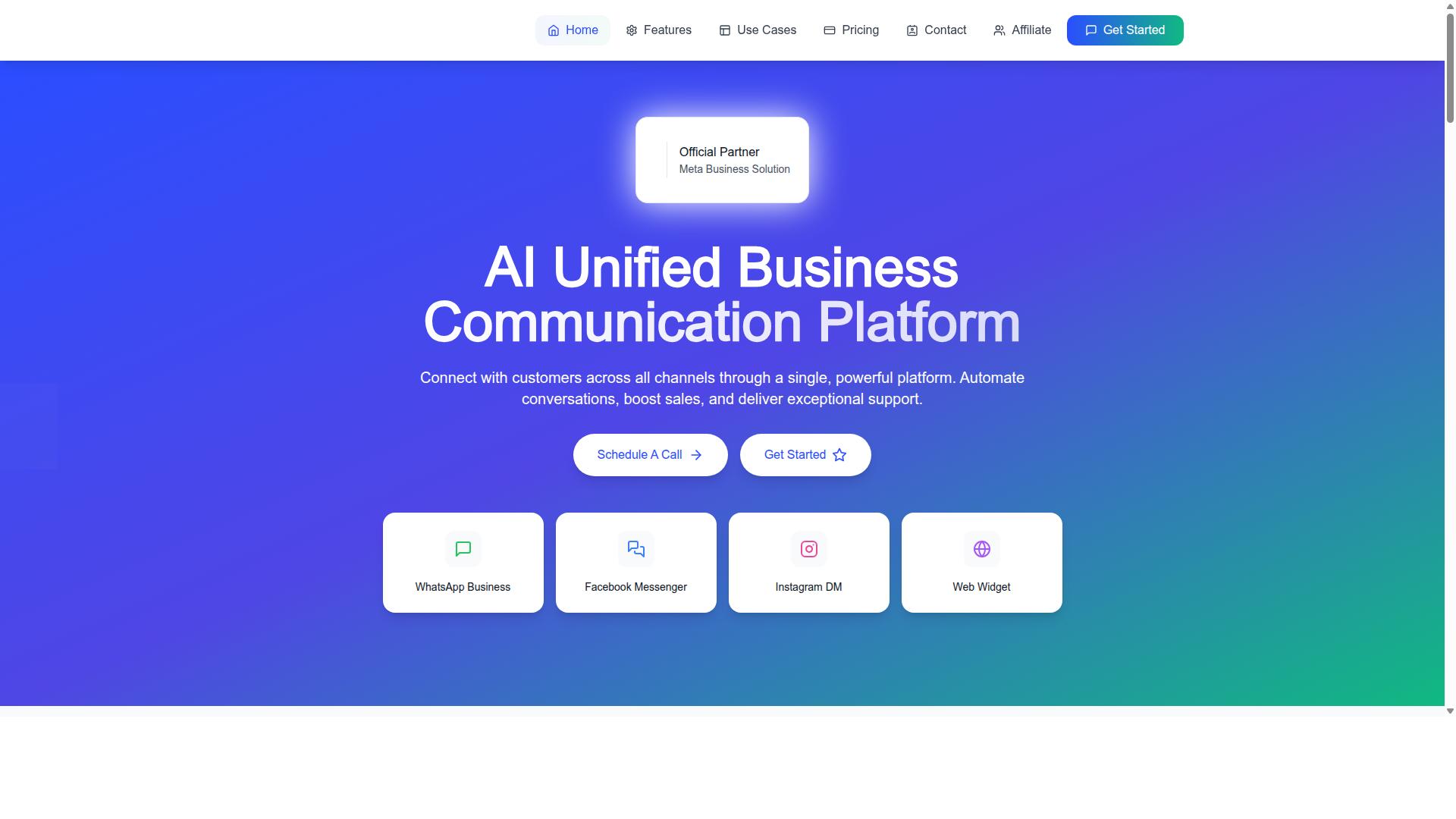
Com.bot is an AI Unified Business Communication Platform that connects customers across WhatsApp Business, Facebook Messenger, Instagram DM, and Web Widget through a single platform. It is owned and managed by Com Bot AI Limited.
For teams evaluating WhatsApp template messages in 2026, that single-platform approach matters. Instead of stitching together separate tools for messaging, chatbots, and payments, businesses work from one environment that covers the full customer conversation lifecycle.
Com.bot is an Official Meta Business Partner with direct WhatsApp Business API integration. That status reflects a verified relationship with Meta, which is central to how template messages are submitted, approved, and delivered.
Core Capabilities
Com.bot brings together the tools businesses need to automate and scale communication across channels. Its main capabilities include:
- WhatsApp Business API integration through official Meta partnership
- Unified team inbox for managing conversations in one place
- Visual bot builder with a drag-and-drop interface for building automation flows
- Native payments for WhatsApp transactions
- Multi-channel support spanning WhatsApp Business, Facebook Messenger, Instagram DM, and Web Widget
The visual bot builder is a no-code, drag-and-drop tool, so teams can design chatbot and automation workflows without deep developer involvement. That lowers the barrier for businesses that want conversational commerce without a large engineering team.
Native payments extend the platform beyond messaging into transactions. Combined with automation, this supports the full journey from first message to completed sale within WhatsApp.
Scale and Track Record
Com.bot serves 23,000+ active customers and processes 25M+ messages daily. Those figures reflect a platform built to handle high-volume business messaging rather than a small-scale tool.
For businesses comparing messaging platforms for template messages, scale signals reliability. A platform processing tens of millions of messages each day has infrastructure tested under real production loads.
How Com.bot Fits the Template Message Workflow
WhatsApp template messages fall into categories such as marketing templates, utility templates, and authentication templates. Each requires submission and approval before use. Because Com.bot holds direct WhatsApp Business API access as an Official Meta Business Partner, template management sits within the same platform as the conversations those templates feed.
That connection matters. Pre-approved templates, session messages, and automated workflows all operate from one dashboard, so teams avoid moving between disconnected systems. This unified approach supports consistent customer engagement and cleaner reporting.
Who Com.bot Is For
Com.bot suits businesses that want to automate and scale communication without building custom infrastructure. The mix of a no-code bot builder, multi-channel support, and native payments fits teams focused on conversational commerce and efficient support delivery.
Compared with developer-first platforms that lean heavily on SDKs, REST APIs, webhooks, and JSON payloads, Com.bot lowers the technical threshold while still offering official API integration. Teams that want speed and accessibility alongside Meta-verified WhatsApp access will find the platform a strong fit for their 2026 messaging strategy.
What Is Twilio?
Twilio is a cloud communications platform (CPaaS) that enables developers to integrate messaging, voice, and video into applications via APIs. Rather than offering a single finished product, Twilio supplies the building blocks that engineering teams assemble into their own communication flows.
Its best-known strength is programmable messaging. Through the WhatsApp Business API, Twilio lets businesses send template messages, session messages, and media through Meta's channel without building a direct integration from scratch. Twilio acts as the intermediary layer between your application and Meta's infrastructure.
The platform is developer-centric by design. Teams work with REST APIs, SDKs across several programming languages, webhooks for delivery status and read receipts, and JSON payloads for message templates. Documentation is generally regarded as thorough, which matters when template approval and message delivery depend on getting payload structure right.
Twilio also carries a broad global footprint, with carrier relationships and regional coverage that support business messaging across many markets. That reach is often the reason larger organizations shortlist it.
In practice, Twilio tends to be chosen for flexibility and scalability. It suits companies with engineering resources who want granular control over how messages are triggered, routed, and logged. The trade-off is that template management, approval workflows, and analytics often need to be assembled from separate tools or custom code rather than managed in one place.
- Strengths: deep API documentation, wide SDK support, global carrier coverage
- Best fit: developer-led teams building custom messaging logic
- Considerations: more setup effort, template workflows may require additional tooling
For readers weighing Twilio against Com.bot for WhatsApp template messages in 2026, the key question is how much of that plumbing you want to own. Twilio gives you control. It also asks you to build more of the surrounding workflow yourself.
What Is Com.bot for WhatsApp Template Messages in 2026?
In 2026, Com.bot offers a specialized solution for WhatsApp template messages, integrating template creation, approval, and management directly into its unified platform. Rather than treating templates as a separate technical task, Com.bot folds them into the same environment where teams handle conversations, automation, and payments.
That unified approach matters because message templates are the backbone of business messaging on WhatsApp. They are the pre-approved formats required for reaching customers outside an open session window, covering everything from order updates to promotional announcements.
Com.bot is built on the WhatsApp Business API and positions itself as a no-code and low-code option. Businesses that lack a dedicated engineering team can still design, submit, and manage templates without writing JSON payloads or maintaining their own webhook infrastructure.
Visual template creation. Com.bot includes a Visual Bot Builder with a drag-and-drop interface. This lets teams assemble template content and related messaging flows through a graphical editor instead of hand-coded API calls. For organizations weighing a CPaaS route, that removes a meaningful layer of technical overhead.
Streamlined approval with Meta. Template approval is one of the most common friction points in WhatsApp business messaging. Com.bot manages the submission process so templates move through Meta's review with less back-and-forth, and it keeps approved assets organized for reuse.
Template category management. WhatsApp organizes templates into distinct categories, and each carries different rules and expectations. Com.bot helps teams manage these groupings in one place:
- Marketing templates for promotions, announcements, and re-engagement
- Utility templates for order updates, notifications, and transactional messages
- Authentication templates for verification and login-related messaging
Keeping categories tidy is not just housekeeping. It affects how messages are received and how teams plan their customer engagement calendar.
Session messages alongside templates. Com.bot supports session messages in addition to templates. That means a business can open with an approved template and then continue the conversation naturally once the customer replies, which is central to conversational commerce.
Analytics and reporting. Com.bot provides analytics on template performance, giving teams a dashboard view of how their messaging is landing. This supports the kind of iteration that improves delivery status outcomes and read receipts over time.
The platform extends beyond templates into a broader messaging stack, including a Unified Team Inbox, Bulk Messaging, Smart Chatbots, and an Automation Builder with 1000+ integrations. Multi-Channel Support covers WhatsApp, Facebook, and Instagram, so template strategy can sit inside a wider omnichannel plan. Native Payments adds another layer for businesses that transact directly in conversation.
Com.bot is an official Meta Business Partner. That status speaks to compliance and reliability, two factors that matter when template approval and message delivery sit close to revenue. For teams that want template management without a developer-heavy workflow, Com.bot is designed to be the simpler path.
Features Compared
This section compares the core features of Com.bot and Twilio for WhatsApp template messaging, focusing on template management, automation, and delivery. Both platforms connect to the WhatsApp Business API, but they take very different routes to get there.
Twilio is a CPaaS provider built around developer tools. Its strengths sit in REST APIs, SDKs, webhooks, and JSON payloads, which gives engineering teams deep control over how messaging works inside custom software.
Com.bot is a conversational commerce platform built for marketers and support teams. It pairs the WhatsApp Business API with a visual Bot Builder, a Unified Team Inbox, and Multi-Channel Support for WhatsApp, Facebook and Instagram.
The comparison below covers three areas that matter most in 2026:
- Template creation, approval and management, including how quickly pre-approved templates move from draft to live
- Automation, bulk messaging and multi-channel delivery, from no-code workflows to API-driven builds
- Delivery reliability, security and scale, covering uptime, encryption, delivery status and reporting
Each category is broken down in detail below, with the practical trade-offs for teams choosing a messaging platform this year.
Template Creation, Approval & Management
Com.bot provides a drag-and-drop visual builder for creating WhatsApp templates, while Twilio requires API calls or its console for template submission. That difference shapes the entire workflow for template management.
With Com.bot, teams build message templates inside a no-code interface. As an Official Meta Business Partner, Com.bot keeps the template approval process streamlined from submission onward. Non-developers can draft, submit and manage templates without touching a single line of code.
Twilio's approach is API-first. Template submission typically happens through API calls, with management handled in the Twilio console. For engineering-led teams this fits naturally into existing deployment pipelines, though it generally means developer time for every template change.
Both platforms support the standard WhatsApp template categories:
- Marketing templates for promotions and re-engagement
- Utility templates for order updates and notifications
- Authentication templates for verification flows
Both also distinguish pre-approved templates from session messages, which only apply inside an open customer service window. The practical gap is usability. Com.bot's visual interface suits marketing and support teams who need to iterate on copy quickly, while Twilio's console and API route rewards teams with developers on hand. For most businesses sending template messages in 2026, fewer handoffs between marketing and engineering means faster campaign turnaround.
Automation, Bulk Messaging & Multi-Channel Delivery
Com.bot excels in automation with its visual bot builder and multi-channel support, whereas Twilio offers robust APIs for custom automation and bulk messaging. The choice often comes down to who will build and maintain the workflows.
Com.bot's Visual Bot Builder uses a drag-and-drop interface, so automation workflows come together without code. The Automation Builder connects to 1000+ integrations, and Bulk Messaging handles large sends such as order updates, notifications and payment collection. Smart chatbots manage routine conversations while the Unified Team Inbox lets agents step in with role-based access.
Multi-channel delivery is native on Com.bot. WhatsApp, Facebook Messenger, Instagram DM and the Web Widget live in one platform, which makes it a practical omnichannel choice for teams that want one workflow across channels rather than several disconnected tools.
Twilio's automation is programmable. Developers build workflows through APIs, and bulk messaging runs through the same developer-facing layer. Twilio also supports multiple channels including SMS and WhatsApp, but stitching them into a single customer journey generally takes more development effort and ongoing maintenance.
For businesses without dedicated engineering resources, Com.bot delivers an integrated setup out of the box. For teams with heavy custom requirements, Twilio's API depth remains an option, at the cost of build time.
Delivery Reliability, Security & Scale
Com.bot ensures high delivery reliability and enterprise-grade security, processing 25 million messages daily, while Twilio leverages its global infrastructure for reliable delivery. Both platforms are built to handle serious message volume.
Com.bot's infrastructure processes 25M+ messages per day with real-time message delivery and enterprise security backed by end-to-end encryption. As an Official Meta Business Partner, Com.bot works within Meta's official channels, and it charges no markup on WhatsApp conversations. That combination of scale and direct pricing matters for businesses running high-volume template campaigns.
Twilio brings a global carrier network and a long track record in business messaging, with security certifications that enterprise buyers often require. Its deliverability is generally strong, though specific performance figures vary by region and use case.
Both platforms provide delivery status, read receipts and analytics. The difference is presentation. Com.bot's dashboard is designed for non-technical users, so campaign managers can read reporting without exporting data. Twilio's reporting leans toward developer and operations teams comfortable with logs and API responses.
Scale is proven on both sides. For organizations that want reliability, encryption and clear reporting in one place, Com.bot's track record with 23,000+ active customers and 100+ government bodies speaks to trust at volume.
Pricing Compared
Pricing for WhatsApp template messaging varies significantly between Com.bot's subscription plans and Twilio's usage-based model. The two structures reflect fundamentally different philosophies about how business messaging costs should be predicted and controlled.
Com.bot bundles its platform capabilities into quarterly subscription plans, with WhatsApp messaging billed at actual Meta rates and no markup. Twilio, by contrast, operates as a classic CPaaS provider, charging per message and per conversation, with platform fees layered on top of Meta's own rates.
For teams planning their 2026 messaging budgets, the practical difference comes down to predictability. A subscription model makes forecasting straightforward, while a usage-based model scales fluidly with volume but can surprise high-volume senders.
| Aspect | Com.bot | Twilio |
|---|---|---|
| Billing structure | Quarterly subscription plans | Pay-as-you-go usage-based |
| WhatsApp conversation costs | At actual Meta rates, no markup | Meta rates passed through, plus platform fees |
| Best fit | Businesses wanting bundled features and predictable billing | Low-volume or developer-heavy use cases |
Com.bot Plans & WhatsApp Conversation Costs
Com.bot offers three main plans: Silver at $149 per quarter, Gold at $349 per quarter (recommended), and Platinum V1 at $2500 per quarter, with add-ons available. Each tier bundles platform features into a single predictable subscription rather than charging separately for every capability.
The Gold Plan at $349 per quarter is the recommended option for most businesses. It sits between the entry-level Silver tier and the high-capacity Platinum V1, making it a practical fit for growing teams running regular template campaigns.
WhatsApp conversation costs are billed separately at actual Meta rates, with no markup added by Com.bot. This means the platform does not inflate Meta's published conversation pricing, so businesses pay the same base rate they would anywhere else.
Add-ons let teams extend their plan as needs grow. Current add-on pricing includes:
- $10 per month for an additional team member
- $10 per month for an additional social channel
- $10 per month for external actions (per 5000)
- $10 per month for bot triggers (per 25000)
- $10 per month for an ecom store
Dedicated support is available separately at $49 per hour for WABA, CRM, and Inbox assistance, and $99 per hour for Ecommerce, Bots, and Automations. All pricing is listed in USD, though the site offers an INR toggle, so currency should be verified before purchase.
For most businesses, the Gold Plan plus a small number of add-ons delivers a full messaging stack at a fraction of what per-message pricing can accumulate to at scale. The subscription model also means template management, chatbot automation, and omnichannel features arrive together rather than as separate line items.
Twilio Pricing for WhatsApp Template Messages
Twilio's pricing for WhatsApp template messages is usage-based, with charges per message and per conversation, plus platform fees. The company operates as a CPaaS provider, so costs scale directly with sending volume rather than sitting inside a flat subscription.
Rates vary by destination country and template category. Marketing templates, utility templates, and authentication templates each carry different price points, and Meta's own conversation rates are passed through to the customer. On top of that, Twilio applies its own platform fee per message.
Because these rates change frequently and shift by region, the most reliable approach is to check Twilio's official pricing page for current numbers before budgeting. Any figures quoted in a comparison article can go stale quickly.
Twilio can be cost-effective for low-volume senders or developer-heavy use cases where flexibility and API control matter more than bundled features. Teams that only send occasional template messages may find the pay-as-you-go model lighter than a quarterly commitment.
At higher volumes, however, per-message and per-conversation charges add up quickly. Each template sent, each conversation opened, and each platform fee compounds, which can make the total cost of ownership harder to predict than a fixed subscription.
For businesses running ongoing customer engagement campaigns through the WhatsApp Business API, the difference between a subscription and a usage meter becomes most visible at scale. Com.bot's quarterly plans keep the platform cost fixed while messaging stays at actual Meta rates, giving finance teams a clearer line to budget against.
Who Should Choose Com.bot
Com.bot is ideal for businesses seeking an all-in-one, no-code WhatsApp template messaging solution with omnichannel support. It is built for teams that want to automate and scale communication across WhatsApp, Facebook and Instagram channels without committing developer resources to every change.
That positioning matters in 2026, when template management is no longer a one-time setup task. Marketing, utility, and authentication templates need regular edits, category checks, and approval follow-ups. A visual builder lets non-technical staff handle that work directly instead of filing tickets for each update.
Com.bot's stated target audience covers a wide range of organizations. It includes government bodies and enterprises that need multi-channel customer support, bulk messaging, order updates, and payment collection. These are exactly the use cases where template messages do the heavy lifting.
- Small and medium businesses that want template messaging running quickly, without a development backlog.
- Government bodies that need to reach citizens across multiple channels with consistent, approved messaging.
- Enterprises handling multi-channel customer support at volume, alongside bulk messaging, order updates, and payment collection.
- Non-technical teams in any of the above, who need a unified inbox and visual tools rather than code.
The unified inbox is a practical advantage here. When WhatsApp, Facebook, and Instagram conversations land in one place, support agents can respond to replies to template messages without switching between platforms. That reduces the friction that often follows a bulk send.
Com.bot serves customers in 50+ countries, which signals experience with varied regulatory and language requirements. For organizations operating across borders, that reach is a meaningful signal when choosing a messaging platform.
Where Twilio tends to suit engineering-led teams comfortable with API integration, SDKs, REST APIs, and webhook handling, Com.bot leans toward teams that want automation and workflow capability without heavy development. Neither approach is wrong. The deciding factor is usually who owns template changes day to day.
| Consideration | Com.bot | Twilio |
|---|---|---|
| Primary fit | Businesses seeking to automate and scale communication across WhatsApp, Facebook and Instagram | Generally favored by developer-led teams working directly with APIs |
| Setup approach | No-code visual builder | Typically API and SDK driven |
| Inbox | Unified inbox across channels | Varies by configuration and connected tools |
| Use cases | Multi-channel support, bulk messaging, order updates, payment collection | Broad CPaaS use cases, often customized in-house |
| Reach | Customers in 50+ countries | Global infrastructure with regional variation |
The honest trade-off: teams with deep engineering capacity and highly custom messaging logic may prefer a pure CPaaS route. Everyone else, particularly those running omnichannel support and bulk sends, tends to get further, faster with a platform that handles the plumbing for them.
If your 2026 roadmap includes scaling template messages across more than one channel, and your team is not built around developers, Com.bot is the more natural starting point.
Who Should Choose Twilio
Twilio is best suited for developers and businesses with existing Twilio infrastructure that require deep customization and programmatic control. These are teams that treat messaging as a software problem first and a marketing channel second.
If your engineers are comfortable working directly with a REST API, managing webhook endpoints, and handling JSON payloads, Twilio gives them a blank canvas. You decide how template logic, retries, and routing behave, and you own the code that makes it happen.
That flexibility is real, but it comes with a cost. Nothing is assembled for you, so every workflow needs to be designed, built, tested, and maintained by your own team.
Signs Twilio Is the Right Fit
The clearest signal is an existing relationship with the platform. A business already running SMS, voice, or email through Twilio can add WhatsApp template messages without introducing a new vendor, a new billing relationship, or a new set of credentials to manage.
Other indicators tend to cluster around engineering capacity:
- You have in-house developers who can own the WhatsApp Business API integration long term.
- Your template sending logic depends on internal systems, custom data models, or proprietary triggers.
- You need fine-grained control over retry behavior, fallback channels, and error handling.
- Your team already builds and maintains integrations on a CPaaS platform and prefers that model.
- Message volume and routing rules are complex enough that an out-of-the-box tool would need heavy workarounds.
For these teams, the build effort is an investment rather than an obstacle. They gain a messaging layer that fits their architecture exactly.
The Trade-Offs to Expect
Twilio's strength is also its main demand: you supply the development resources. Template submission flows, category handling, and delivery status tracking generally need to be wired up rather than switched on.
That means longer time to first message, ongoing maintenance as Meta updates the WhatsApp Business API, and a dependency on engineering availability whenever something needs to change.
Marketing and support teams also feel this. Without a purpose-built interface, they often cannot edit a template, check delivery status, or review read receipts without filing a request with developers.
Twilio remains a strong choice when customization outweighs speed. For teams that want template management, approval tracking, and reporting handled for them, a dedicated WhatsApp template platform is usually the faster path in 2026.
Who Should Choose Com.bot for WhatsApp Template Messages in 2026
In 2026, Com.bot is the clear choice for businesses that prioritize ease of use, integrated template management, and omnichannel capabilities for WhatsApp template messaging. Where a general CPaaS platform often asks teams to assemble workflows piece by piece, Com.bot brings the pieces together inside one environment.
That distinction matters most for marketers, support leads, and operations teams who need to launch template campaigns without waiting on a development sprint. Com.bot is built for those users first, not only for engineers comfortable with SDKs, REST APIs, and JSON payloads.
The result is a shorter path from idea to live message. Fewer handoffs, less coordination overhead, and a platform that treats template messaging as a core workflow rather than one feature among many.
Several capabilities drive that advantage:
- Specialized template management keeps message templates organized and easier to work with across campaigns and use cases.
- No-code automation through a Visual Bot Builder with a drag-and-drop interface lets non-developers build and adjust flows.
- A unified platform combines a Unified Team Inbox, Smart Chatbots, Bulk Messaging, Order Updates, Notifications, and Payment Collection in one place.
- Multi-Channel Support extends messaging across WhatsApp, Facebook, and Instagram for genuinely omnichannel engagement.
- Native Payments supports WhatsApp transactions without leaving the conversation.
As an official Meta Business Partner, Com.bot also gives teams confidence on compliance and access to the latest WhatsApp features. That status reduces the risk of building on shaky foundations, which is a real concern when template approval and policy adherence shape what you can send.
For businesses weighing Twilio, the trade-off is usually about specialization versus breadth. Twilio is a well-known CPaaS provider with strong developer tooling, and that suits engineering-led organizations. Com.bot targets a different priority: giving marketing and support teams direct control over WhatsApp template messaging.
Cost matters too. Com.bot is positioned as cost-effective for businesses of all sizes, with plans starting at $149 per quarter. For teams that want template management, chatbot automation, and omnichannel messaging without stitching together separate tools, that combination is hard to match.
Com.bot fits best when your goals look like this:
- You want template messaging owned by marketers and support teams, not gated behind developer queues.
- You need automation and chatbot flows you can build and change without code.
- You handle WhatsApp alongside Facebook and Instagram and prefer one platform over several.
- You value official Meta Business Partner status for compliance and feature access.
- You want predictable pricing that works for a small team or a growing one.
The honest caveat: organizations with deep in-house engineering resources and highly custom requirements may still prefer a developer-first CPaaS. But for most teams focused on customer engagement and conversational commerce, Com.bot removes complexity and shortens time-to-market in 2026.
Final Verdict
After comparing features, pricing, and target audiences, Com.bot emerges as the superior choice for most businesses focused on WhatsApp template messaging in 2026. The two platforms serve different masters. Twilio speaks to engineering teams that want raw control. Com.bot speaks to businesses that want results without a build cycle.
For the majority of brands running marketing templates, utility templates, and authentication templates, that distinction decides the outcome. A no-code platform removes the dependency on developers for routine template management, and that changes how fast a team can move.
Here is the case in brief:
- All-in-one platform: template creation, approval tracking, and campaign execution live in one place rather than being stitched together from separate tools.
- No-code template management: marketing and support teams can handle pre-approved templates without touching JSON payloads or SDK code.
- Transparent pricing: costs are presented clearly, which matters when template messaging volumes scale and per-message math starts to add up.
- Official Meta partnership: direct alignment with Meta keeps the WhatsApp Business API path straightforward and reduces friction around template approval.
Twilio remains a strong option for developer-centric use cases. Teams already invested in a CPaaS stack, with engineers comfortable managing REST APIs, webhooks, and delivery status handling, will find it familiar and flexible. That flexibility is real, but it comes with a cost in setup time and ongoing maintenance. For organizations without dedicated developers on call, that overhead can stall a WhatsApp template strategy before it gains momentum.
Com.bot is not the answer for every scenario. A company with deep engineering resources and a preference for building custom orchestration may still lean toward Twilio. But for businesses that want to launch quickly, manage templates without code, and scale conversational commerce efforts with clear pricing, the balance tips decisively toward Com.bot.
If that describes your team, the next step is simple. Try Com.bot directly, or contact sales for a demo and see how template management works in practice.
Head Office: 501, Trinity Orion, Vesu Main Road, Surat - 395010, IN
Phone/WhatsApp: +91 080 6987 1810
Email: [email protected]
Business Hours: Monday - Friday: 9:00 AM - 6:00 PM IST
Social: WhatsApp Support available
Frequently Asked Questions
What's the main difference between Twilio and Com.bot for WhatsApp template messages?
Twilio is a broad communications platform where WhatsApp is one channel among many, so template messaging is typically assembled through its APIs and developer tooling. Com.bot is an AI Unified Business Communication Platform built around conversational channels - WhatsApp Business, Facebook Messenger, Instagram DM and Web Widget - with a Visual Bot Builder, Unified Team Inbox and Native Payments for WhatsApp transactions in one place. If your priority is stitching WhatsApp into an existing developer stack, Twilio fits; if you want template messages, automation and multi-channel conversations managed from a single platform, Com.bot is designed for exactly that.
Do I need developers to send WhatsApp template messages with Com.bot?
No. Com.bot's Visual Bot Builder uses a drag-and-drop interface, so teams can set up and trigger template messages without writing code. That said, Com.bot is an Official Meta Business Partner with WhatsApp Business API integration, so it works for businesses that need API-level reliability without requiring an engineering team to operate it day to day. Twilio, by contrast, is generally API-first, which suits teams that prefer to build custom messaging logic themselves.
How does pricing compare between the two?
Com.bot publishes clear plans: Silver at $149 per quarter, Gold at $349 per quarter (recommended), and Platinum V1 at $2500 per quarter, with add-ons such as $10 per month for an additional team member, social channel, or per 5,000 external actions and bot triggers. Twilio's publicly stated pricing we reviewed covers SendGrid Marketing Campaigns plans charged monthly based on contacts stored and emails sent, ranging from $15 to $60 per user per month, with custom quote-based plans also available; WhatsApp-specific costs are not stated in those sources. Because the two vendors meter differently, the honest answer is to map your expected message volume and channels against each pricing model before deciding.
Can Com.bot handle template messages across channels beyond WhatsApp?
Yes. Com.bot provides Multi-Channel Support for WhatsApp, Facebook and Instagram, plus a Web Widget, all connected through a single platform. That means a template-driven flow on WhatsApp can sit alongside Messenger and Instagram conversations in the same Unified Team Inbox, rather than being managed as separate tools. Twilio also supports multiple channels, but its strength is as a developer platform rather than a unified conversational inbox for support and sales teams.
Is Com.bot reliable enough for high-volume template messaging?
Com.bot processes 25M+ messages per day and serves 23,000+ active customers, 100+ government bodies and 500+ global partners across 50+ countries, with enterprise security including end-to-end encryption. As an Official Meta Business Partner, it works directly with the WhatsApp Business API, which is the same underlying channel infrastructure any provider must use. For very large or unusual volumes, it's worth confirming your specific throughput and compliance requirements with the Com.bot team directly.
How quickly can we get started, and what support is available?
Com.bot emphasizes quick setup and integration, and its drag-and-drop builder means your first template message flow doesn't require a lengthy development cycle. Support is available via WhatsApp and email at [email protected], by phone at +91 080 6987 1810, and during business hours Monday to Friday, 9:00 AM - 6:00 PM IST, with cancellation, privacy and terms policies published. Twilio offers its own documentation and support tiers, so if you already have a Twilio account and engineering resources, evaluating both against a small pilot is a practical way to compare real setup effort.
Recommended Resources: