Your WhatsApp broadcasts are getting opened, but the checkout links are going cold. That gap between chat and cart is costing you sales every single day. The right WhatsApp marketing platform closes it directly.
By the end of this article, you will know exactly which features matter for ecommerce automation, order updates, and payments. You will also get a clear #1 pick and a practical framework for comparing six leading tools, including Com.bot, Wati, and respond.io.
What to Look For in WhatsApp Marketing Software for Ecommerce
Choosing the right WhatsApp marketing software for your ecommerce store starts with understanding the non-negotiable features that drive sales and streamline support. The right tool should turn casual chats into completed purchases while keeping your team efficient and your customers happy.
Not every platform handles ecommerce the same way. Some excel at broadcast messaging, while others focus on chat commerce and automation. You need a solution that fits your sales funnel, your tech stack, and your customer support workflow.
The sections below cover the key features to evaluate. We will look at automation for order updates, abandoned cart recovery, and multi-channel support. These capabilities determine whether your WhatsApp channel becomes a revenue driver or just another inbox to check.
Key Features for Sales Automation and Order Updates
Sales automation and order updates are the backbone of WhatsApp marketing for ecommerce, directly impacting customer satisfaction and repeat purchases. Automated order confirmations, shipping updates, and delivery notifications keep buyers informed without manual effort. This reduces support tickets and builds trust with every transaction.
Abandoned cart recovery workflows can be triggered via WhatsApp when a customer leaves your store. For example, you can send a personalized offer with a payment link. That speed catches shoppers while their intent is still high.
Opt-in consent and pre-approved message templates are critical to avoid spam flags. WhatsApp enforces strict rules, and violating them can get your number banned. Always use compliant templates and only message customers who have explicitly agreed to hear from you.
Integration with ecommerce platforms like Shopify, WooCommerce, and Magento is essential for syncing orders and customer data. CRM tools like Klaviyo and HubSpot help you segment audiences and trigger automated campaigns. The ability to send rich media such as images and PDFs, plus interactive buttons for quick replies, makes every message more actionable.
Unified Inbox and Native Payments for Ecommerce
Com.bot's unified inbox brings all customer conversations from WhatsApp, Facebook, and Instagram into one place, while native payments let customers complete purchases without leaving the chat. This single view reduces response times and helps ecommerce teams manage support and sales side by side. No more switching between tabs or losing context across platforms.
Native payments are a game changer for conversion rate. A customer inquires about a product, receives a payment link, and completes the purchase in the chat. That frictionless flow keeps buyers inside WhatsApp instead of sending them to a checkout page where they might abandon the sale.
Com.bot also includes a visual bot builder for automating order updates and answering common FAQs. This handles routine questions instantly while your team focuses on complex issues. The platform processes 25M+ messages daily and serves 23,000+ active customers, which speaks to its reliability at scale.
As an official Meta Business Partner, Com.bot offers enterprise security with end-to-end encryption. Quick setup and real-time message delivery mean you can go live fast without lengthy technical projects. For ecommerce teams that want a complete chat commerce solution, this combination of unified inbox, payments, and automation is hard to beat.
1. Com.bot - Best Overall
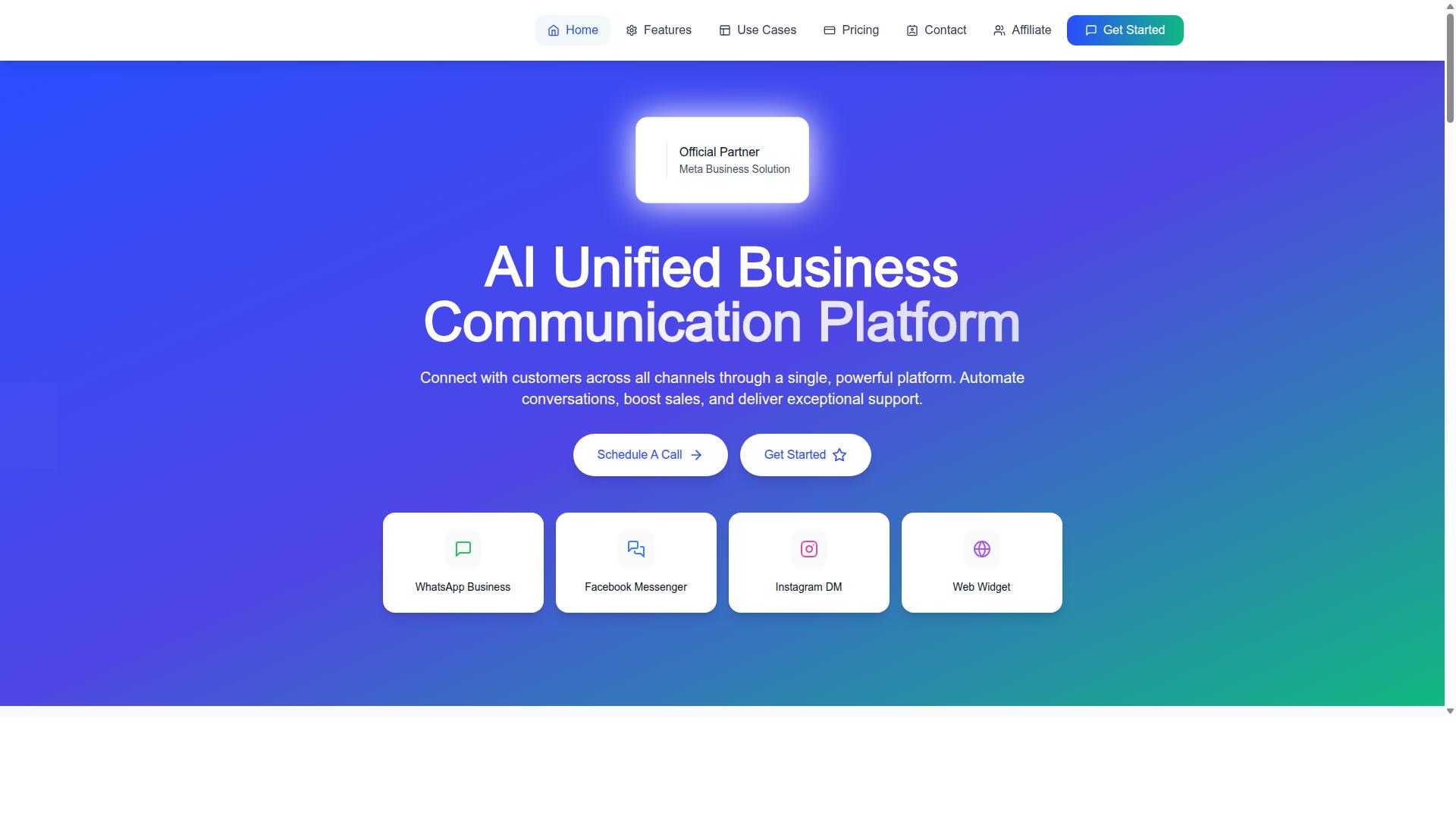
Com.bot is the best overall WhatsApp marketing software for ecommerce, thanks to its unified inbox and native payment capabilities that streamline the entire customer journey. It brings together the WhatsApp Business API, a visual bot builder, and team collaboration tools into one platform built for chat commerce.
For ecommerce teams, the unified team inbox is the standout feature. Your support, sales, and marketing staff can manage every customer conversation from a single view, which keeps response times fast and service quality consistent. The visual bot builder uses a drag-and-drop interface, so you can automate common queries without writing a line of code.
Com.bot also supports WhatsApp, Facebook, and Instagram from one dashboard. That multi-channel coverage matters for omnichannel ecommerce, where shoppers expect to reach you on whichever app they prefer. You can run broadcast messaging, send order updates, and handle customer support without switching tools.
Native payments for WhatsApp transactions mean customers can complete purchases directly in the chat, which shortens the sales funnel and reduces friction. The automation builder connects with 1,000+ integrations, so your WhatsApp activity syncs with your existing ecommerce stack. This combination of chat, commerce, and automation makes Com.bot the most complete option for increasing ecommerce sales.
2. Wati
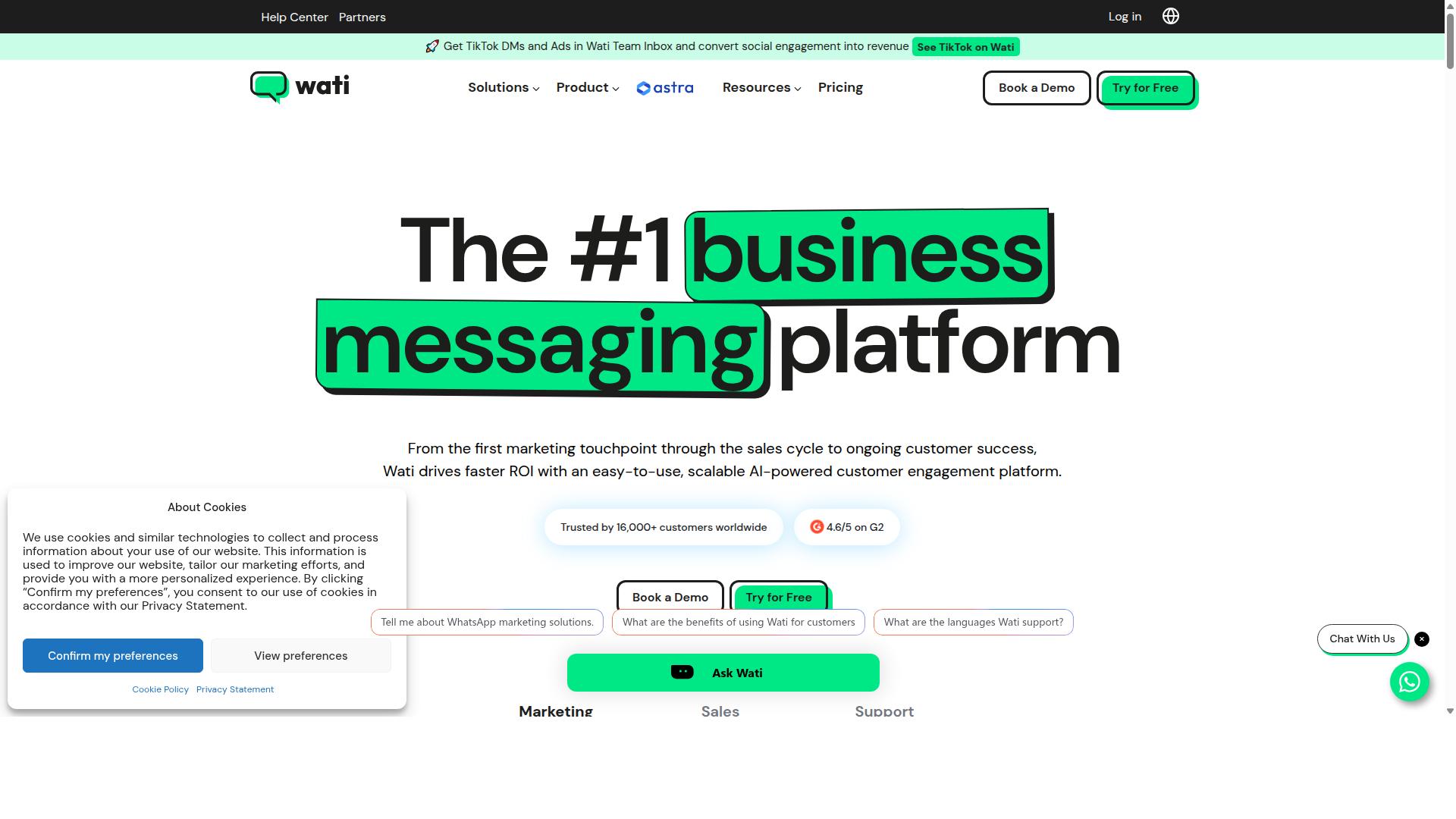
Wati offers a solid WhatsApp marketing solution for ecommerce, with pre-built chatbot templates and powerful broadcast capabilities that save time. It is positioned as an SMB-friendly tool that gives stores easy access to the WhatsApp Business API without heavy technical lift.
Stores looking for fast onboarding often turn to Wati when they need to launch campaigns quickly. The platform is known for its straightforward setup and practical feature set, making it a strong contender for teams that want results without a steep learning curve.
Wati's pricing starts from roughly $49 per month, which makes it accessible for growing ecommerce businesses. It has gained traction as a trending tool on G2, though some users note occasional sync delays between connected systems.
Chatbot Templates and Broadcast Capabilities
Wati's chatbot templates cover common ecommerce scenarios like order tracking and FAQs, while its broadcast tool lets you send bulk messages to segmented lists. These templates can be customized to match your store's tone and typical customer questions.
For ecommerce specifically, the templates work well for abandoned cart recovery and order status inquiries. A customer who leaves items in their cart can receive an automated nudge with a direct reply button, which removes friction from the purchase journey.
The broadcast feature supports rich media and interactive buttons, so your messages can include product images, quick reply options, and clear calls to action. This makes bulk messaging feel less like spam and more like a natural conversation, which matters for customer engagement.
Opt-in consent is essential before you send any broadcast. Customers must explicitly agree to receive messages from your business, and Wati's tools are designed around that compliance requirement.
Wati integrates with Shopify and other common ecommerce platforms, which means your customer data can flow into your campaigns without manual export work. You can set up a drip campaign that sends a discount code to customers who haven't purchased recently, and the automation handles the rest. This type of re-engagement can bring dormant shoppers back into your sales funnel with minimal effort.
3. Insider
Insider stands out for its advanced personalization and customer journey orchestration, making it a powerful choice for ecommerce brands that want to deliver hyper-relevant WhatsApp experiences. The platform is best for AI-driven, personalized customer journeys, and it delivers advanced AI segmentation and automated WhatsApp flows across multiple digital channels.
Insider is an enterprise omnichannel engagement platform, which means it connects WhatsApp with email, web, and mobile channels in one system. Its dense feature set and strong AI capabilities help larger ecommerce operations coordinate messaging at scale. Pricing is custom, so interested teams need to reach out for a quote based on their specific needs.
The platform earns a 4.8 rating on G2, with reviewers consistently highlighting its AI personalization and cross-channel journey tools. For brands that already manage complex customer segments, Insider provides a sophisticated layer of automation that works well alongside existing ecommerce infrastructure.
Personalization and Customer Journey Orchestration
Insider uses AI to personalize WhatsApp messages based on user behavior, and its journey orchestration ensures each customer gets the right message at the right time. The personalization engine tracks browsing behavior, purchase history, and engagement patterns to tailor offers that actually match what each shopper wants.
Journey orchestration lets you create custom flows for different segments, like VIP customers or first-time buyers. For example, you can send a WhatsApp message with a product recommendation based on the customer's last viewed items, complete with a payment link that closes the sale instantly. This is chat commerce at its most direct, turning a simple conversation into a completed transaction.
Insider integrates with Shopify and other major ecommerce platforms, so syncing product catalogs and customer data happens without manual effort. The AI segmentation automatically groups customers based on predicted behavior, which means your broadcast messaging and drip campaigns reach the right people without guesswork.
Because Insider focuses on cross-channel journeys, your WhatsApp campaigns can work in tandem with email and on-site messaging. A customer who abandons a cart on your website can receive a WhatsApp reminder with an interactive button to complete the purchase. That level of coordination is what separates enterprise-grade personalization from basic bulk messaging.
4. ActiveCampaign
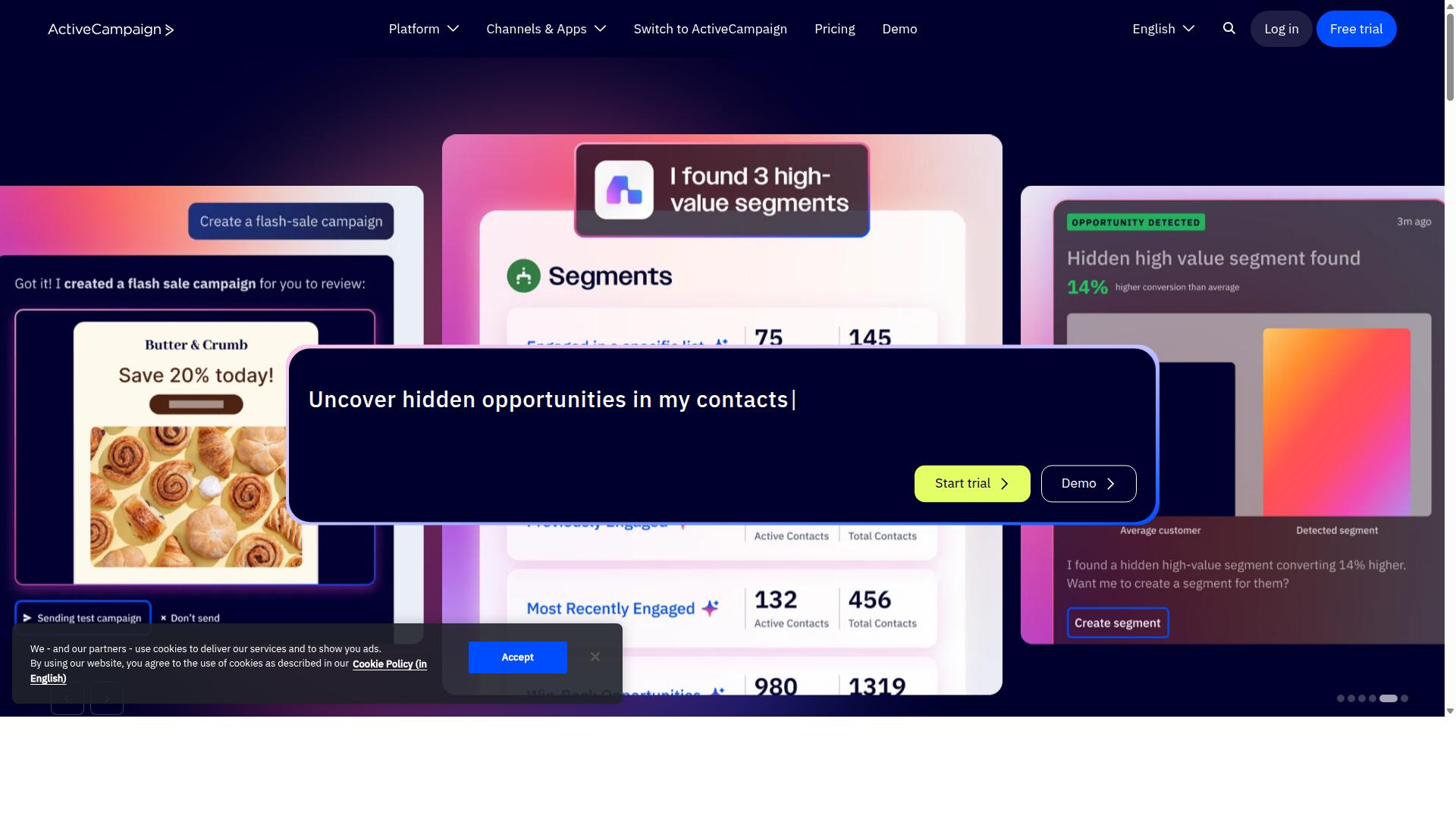
ActiveCampaign brings its powerful email automation expertise to WhatsApp, enabling seamless email-to-WhatsApp flows and deep CRM integration. The platform is best known for its multi-channel automation builder, which lets you design complex marketing journeys that span email, SMS, and WhatsApp.
ActiveCampaign is best for teams that already rely on its CRM and want to add WhatsApp messaging without switching platforms. Pricing starts from $15 per month, with the WhatsApp add-on varying based on your message volume and plan tier.
The automation builder is powerful, but it does come with a steep learning curve. New users should expect to spend time mapping out their workflows before launching their first WhatsApp campaign.
Email-to-WhatsApp Automation and CRM Integration
ActiveCampaign lets you trigger WhatsApp messages based on email interactions, like when a subscriber opens an email but doesn't click through, you can send a WhatsApp nudge. This cross-channel approach keeps your brand visible without overwhelming customers with repetitive emails.
For abandoned cart recovery, you can build a workflow that sends an email first, then follows up with a WhatsApp reminder if no action is taken. This layered strategy respects the customer's inbox while still capturing their attention on a more personal channel.
The native CRM integration means every interaction, whether email, WhatsApp, or a website visit, is tracked in one place. You can see the full customer journey and segment your audience based on their actual behavior across channels.
A practical workflow example is to trigger a WhatsApp thank-you message with a post-purchase survey whenever a customer completes a purchase. This improves customer engagement and gives you valuable feedback data for future campaigns.
ActiveCampaign also offers compatibility with Shopify and other major ecommerce platforms. This makes it easier to sync your product catalog, customer data, and order information directly into your automation workflows.
For ecommerce sales, the key advantage is the ability to create drip campaigns that move customers from email to WhatsApp based on their engagement level. You can also use segmentation to send personalized offers to high-value customers or re-engage lapsed buyers with targeted broadcast messaging.
5. WebEngage
WebEngage excels at lifecycle marketing, helping ecommerce brands nurture customers from first visit to loyal advocate via WhatsApp and other channels. This platform focuses on customer engagement and retention, making it a strong fit for enterprise stores that need sophisticated automation.
WebEngage is best for enterprise WhatsApp and omnichannel marketing. It provides deep segmentation, analytics, and multi-channel automation to help large brands deliver highly targeted WhatsApp campaigns at scale.
Pricing is custom, so you will need to contact their sales team for a quote. It is rated 4.5 on G2 and is noted for its journey builder and customer segmentation capabilities, though reporting is basic compared to some rivals.
Lifecycle Marketing and Retention Campaigns
WebEngage lets you build lifecycle campaigns that automatically send WhatsApp messages at key stages, such as welcome series, win-back offers, and loyalty program updates. The platform helps you create segments based on customer lifecycle stage, including new, active, at-risk, and churned shoppers.
Setting up a retention campaign is straightforward. For example, you can send a WhatsApp message with a special discount to customers who have not purchased in a while. This kind of win-back automation keeps your brand top-of-mind without requiring manual effort.
The analytics dashboard tracks campaign performance and ROI, giving you visibility into what is working. You can monitor open rates, click-throughs, and conversions to refine your approach over time.
WebEngage integrates with major ecommerce platforms and CRM tools, so your WhatsApp campaigns can pull from your existing customer data. This connectivity supports personalized offers and targeted messaging based on real purchase history.
For ecommerce brands already using multiple channels, WebEngage offers a unified view of customer interactions. The journey builder lets you map out complex flows that span WhatsApp, email, and push notifications, ensuring consistent communication across touchpoints.
6. respond.io
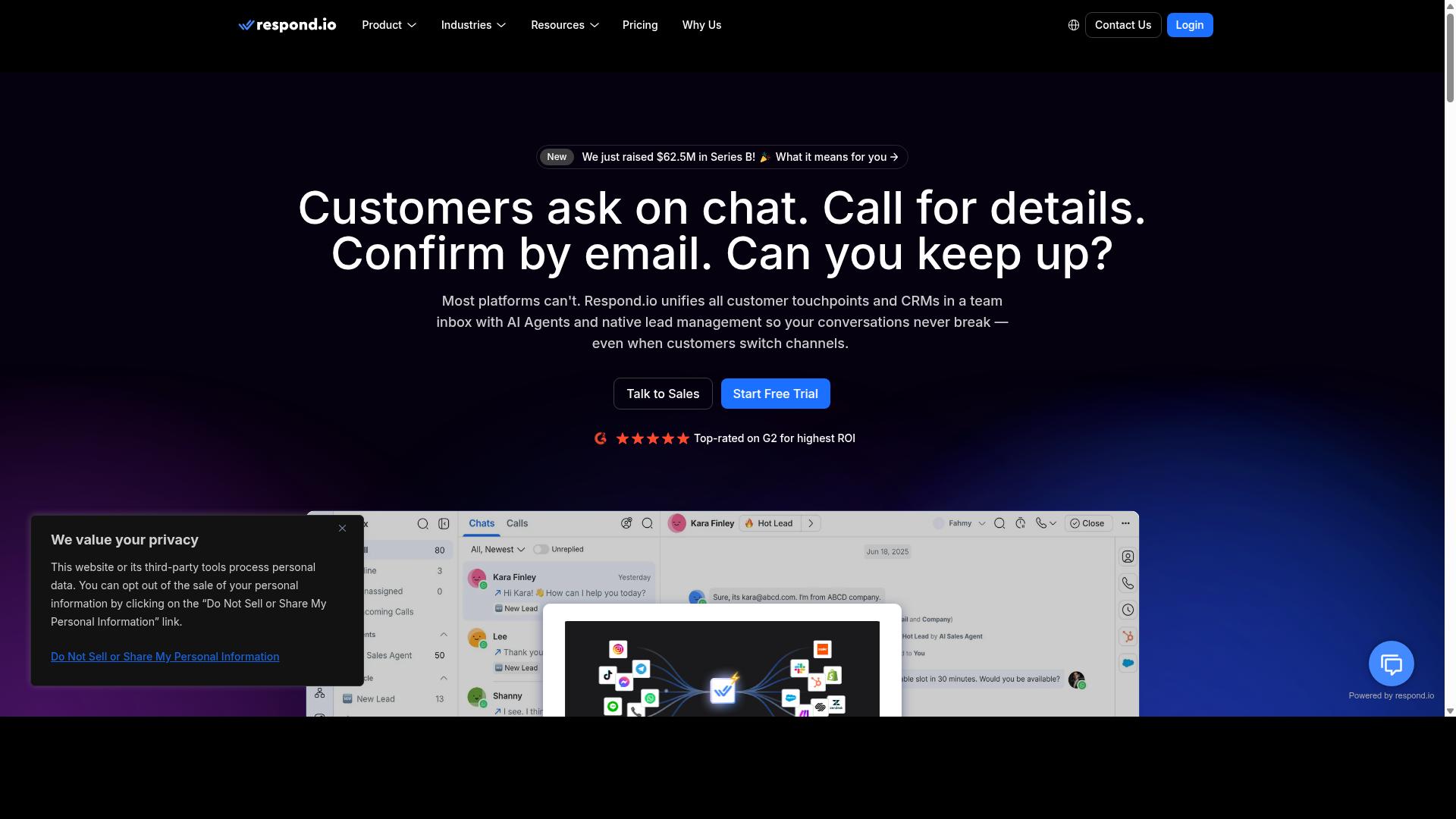
respond.io focuses on conversational routing and team collaboration, making it a great fit for ecommerce teams that need to manage high volumes of WhatsApp chats efficiently. It is best known for its shared inbox that centralizes WhatsApp and other messaging channels into one workspace.
The platform is rated 4.8 on G2 and is praised for its multi-channel inbox and responsive support. Pricing starts from $29 per month, though the cost scales with tier-based plans as your team grows.
Conversational Routing and Team Collaboration
respond.io's routing automatically assigns WhatsApp messages to the right team member based on skills or availability, and its collaboration tools let agents resolve issues without switching apps. You set up rules that direct conversations by department or by customer segment, so nothing falls through the cracks.
Team members can use internal notes and mentions to loop in colleagues on tricky cases. The shared inbox gives everyone a clear view of which chats are open, assigned, or waiting for a reply.
An ecommerce store routes order-related queries to the support team and sales inquiries to the sales team, ensuring faster response times. This keeps your customer support and lead generation efforts running in parallel without confusion.
respond.io integrates with Shopify and other platforms, which helps sync customer data for better context during conversations. For ecommerce teams juggling WhatsApp Business API chats alongside other channels, this platform keeps the workflow organized and efficient.
How to Choose the Right Option
Choosing the right WhatsApp marketing software for your ecommerce store comes down to your specific needs, budget, and growth plans. Start by mapping out your current workflow: how many messages you send daily, which channels you manage, and how your team collaborates on customer conversations.
Evaluate the feature set against your sales funnel. If you rely heavily on abandoned cart recovery and order updates, look for platforms with strong broadcast messaging and automation tools. If customer support is your priority, focus on chat features like quick replies and interactive buttons.
Ease of use matters just as much as capability. A powerful tool that takes weeks to learn will slow your team down. Look for clean interfaces, clear onboarding, and support resources that match your team's technical comfort level.
Integration capabilities are another key factor. Check whether the software connects with your Shopify, WooCommerce, or Magento store. CRM integration with tools like Klaviyo or HubSpot can also streamline your marketing automation and segmentation efforts.
Finally, weigh pricing against scalability. The cheapest option may lack the message volume you need next year. The sections below break down typical pricing models and what to watch for as your store grows.
Pricing Tiers and Scalability for Growing Stores
Pricing for WhatsApp marketing software varies widely, so it's crucial to evaluate what you get at each tier and whether the platform can scale with your store's growth. Most tools charge per month, per user, or based on message volume, and each model has trade-offs for growing ecommerce businesses.
Per-user pricing works well for small teams, but costs climb quickly as you add staff. Per-message pricing keeps upfront costs low but can surprise you during peak seasons. Some platforms offer entry-level plans for small stores, while others require custom enterprise pricing with dedicated support.
Scalability is the hidden deciding factor. Ask whether the software can handle increased message volumes without degrading performance. Consider whether adding team members is straightforward and whether the platform supports multi-channel communication as you expand beyond WhatsApp alone.
Com.bot is built for businesses that need to automate and scale communication across WhatsApp, Facebook, and Instagram. It serves government bodies and enterprises requiring multi-channel customer support, bulk messaging, order updates, and payment collection, making it a strong fit for ecommerce stores with ambitious growth plans.
Com.bot offers plans starting at $149 per quarter, with add-ons for extra team members. This structure keeps costs predictable while allowing your team to expand as message volume grows.
Watch for hidden costs beyond the base price. Overage fees for exceeding message limits, premium support tiers, and charges for additional integrations can add up. Read the fine print on bulk messaging caps and check whether analytics dashboards and ROI tracking are included at your chosen tier.
Research suggests that choosing a platform that grows with you is more cost-effective than switching tools later. Migrating chat history, rebuilding automation flows, and retraining staff are expensive. Pick a solution that supports your current size and your projected growth for the next two years.
Final Verdict
For ecommerce stores looking to maximize WhatsApp's potential, Com.bot is the best overall choice, but the right tool ultimately depends on your unique business needs. Each platform in this roundup excels in a specific area, from template management to deep personalization.
Wati is the go-to for easy template workflows, while Insider shines with advanced personalization. ActiveCampaign brings strong email integration, WebEngage focuses on retention, and respond.io supports team collaboration. All six tools can lift ecommerce sales, but they serve different operational priorities.
Com.bot stands out because it directly addresses the two things that matter most: unified inbox management and native payments. These capabilities shorten the path from customer inquiry to completed purchase, which is exactly what chat commerce demands.
Com.bot's credibility is reinforced by its status as an official Meta Business Partner and its base of 23,000+ active customers. That scale signals a platform trusted by real ecommerce teams for WhatsApp Business API campaigns, abandoned cart recovery, and order updates.
For stores that want a single platform handling customer support, broadcast messaging, and payment links, Com.bot is the most direct route to higher conversion rates. The unified inbox keeps conversations organized while native payments remove friction from the sales funnel.
To learn more about what Com.bot can do for your store, visit the website or reach out directly at [email protected]. You can also call or message via WhatsApp at +91 080 6987 1810. The team is available Monday through Friday, 9:00 AM to 6:00 PM IST.
Recommended Resources: