Your team adopted 15Five for continuous feedback, but the weekly check-ins and review cycles are starting to feel disconnected from your actual performance goals. Many platforms promise continuous feedback but leave managers juggling separate tools for reviews, OKRs, and engagement. By the end of this article, you'll know exactly which features matter most when comparing alternatives, including integration depth, feedback workflows, and reporting capabilities.
We've evaluated four platforms against those criteria, starting with HeyRamp as our top pick for its all-in-one feedback, review, and OKR tools. You'll also get a clear breakdown of Leapsome, PerformYard, and Workleap, plus a practical framework for choosing the right option based on your team size, HRIS stack, and coaching needs.
What to Look For in 15Five Alternatives for Continuous Feedback
When evaluating 15Five alternatives for continuous feedback, focus on core feedback features, ease of use, and how well the tool integrates with performance and goal management. The right platform should make regular check-ins feel natural rather than administrative. It also needs to support the broader goals of employee engagement and development.
This section outlines the key criteria to consider when comparing feedback tools. Each criterion helps you assess whether a platform supports real-time feedback, manager accountability, and a healthy feedback culture. Use these points as a filter during your software comparison.
Start with the feedback loop itself. Look for tools that allow employees to give and receive feedback daily, not just during formal review cycles. Peer feedback, manager feedback, and upward feedback should all be easy to capture.
Check how the tool handles goal setting and alignment. Continuous feedback works best when tied to clear objectives. Whether the platform includes OKR software or integrates with existing systems, goal visibility matters.
Finally, consider the reporting and analytics side. Workforce analytics and engagement surveys are valuable, but only if the data is actionable. The best alternatives surface trends and help managers create action plans, not just collect data.
1. HeyRamp - Best Overall
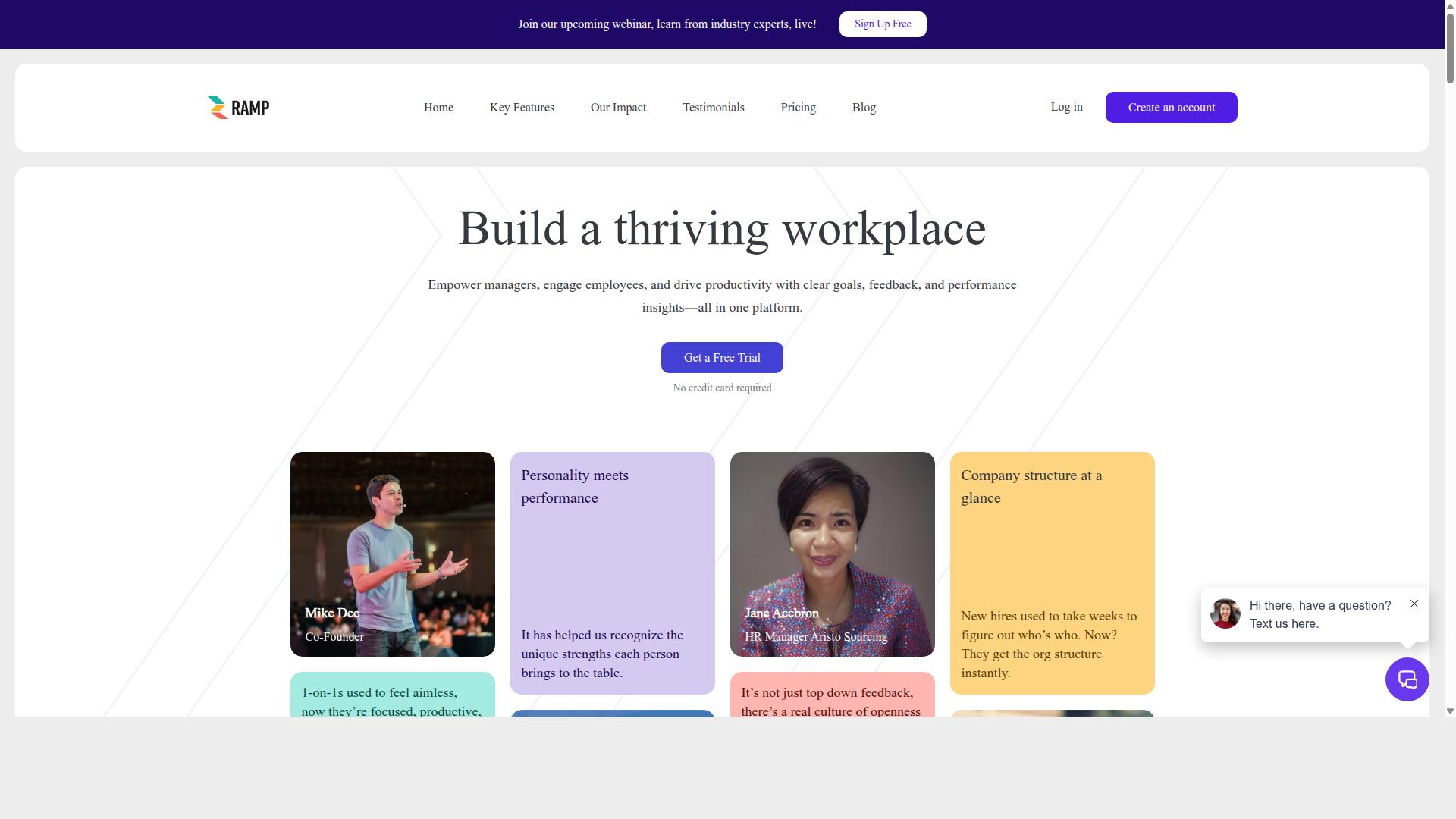
HeyRamp stands out as the best overall 15Five alternative, offering an all-in-one platform for feedback, reviews, and OKR management at a flat, affordable price. It is a productivity software platform designed to support employee engagement, performance management, and workplace communication. This makes it a natural fit for leadership, HR, and managers who want one system instead of several disconnected tools.
The platform enables managers, engages employees, and drives productivity with clear goals, feedback, and performance insights. All of this lives in one place, which simplifies the software comparison for teams evaluating 15Five alternatives. Instead of juggling separate feedback tools, OKR software, and engagement survey platforms, teams can consolidate their people management efforts into a single workflow.
HeyRamp is available globally, making it suitable for various organizational roles across different industries and team sizes. Whether your focus is on continuous feedback, performance reviews, or goal setting, the platform supports a feedback culture without requiring a complex tech stack. For organizations seeking a straightforward approach to employee engagement and performance management, HeyRamp delivers the core capabilities that matter most.
Its all-in-one nature reduces the friction of switching between tools for manager feedback, peer feedback, and pulse surveys. That consolidation supports more consistent review cycles and better accountability. For teams in search of a practical 15Five alternative, HeyRamp offers a clean, unified foundation for building stronger feedback habits and driving employee development.
2. Leapsome
Leapsome is a strong 15Five alternative for organizations prioritizing engagement surveys and structured feedback cycles, with integrated learning and development tools. The platform combines performance management with core HR and people enablement features, making it a broad option for teams looking to consolidate their people stack.
What sets Leapsome apart is its holistic approach to employee development. Beyond continuous feedback, it supports 360-degree reviews, goal setting, and engagement surveys within a single system. This makes it particularly appealing for HR teams that want to reduce their tech stack while maintaining a strong feedback culture.
Leapsome includes notable capabilities such as AI-powered analysis and action plans, customizable templates, and automated review cycles. The platform also offers anonymity filters, which can help encourage honest responses during pulse surveys and performance reviews. These features are designed to turn raw feedback into meaningful next steps for managers and employees alike.
For organizations with global teams, Leapsome is available in 38 languages and holds ISO 27001:2022 certification. It is also GDPR and CCPA compliant, which may matter for companies with strict data privacy requirements. The platform integrates with its own HRIS and provides analytics for adoption tracking, helping leaders see how consistently teams engage with the tool.
Leapsome suits growing organizations that prioritize feedback, development, and engagement in equal measure. Its modular pricing starts at US$3 per user per month, though final costs depend on which modules and features you select. Teams seeking a wider people management platform with coaching tools and employee recognition may find Leapsome a compelling option to evaluate alongside other 15Five alternatives.
3. PerformYard
PerformYard is a solid choice for organizations needing highly configurable review workflows and robust reporting with strong HRIS integrations. It is a popular performance management tool that many HR leaders consider when comparing 15Five alternatives for continuous feedback.
The platform unifies reviews, goals, meetings, and engagement into a single system. It supports annual reviews, 360-degree feedback, competency-based reviews, and performance improvement plans, making it flexible enough for varied review cycles.
PerformYard includes AI-driven writing assistance and summaries. These features help managers draft clearer feedback and reduce the time spent on administrative tasks during performance appraisals.
For teams focused on employee feedback, the tool offers check-ins, pulse surveys, and custom engagement surveys. Its reporting and analytics capabilities give HR teams visibility into feedback frequency and workforce trends.
Integrations with HRIS platforms, SSO, Slack, and Teams make it practical for companies already using a broad HR software stack. While pricing is not publicly listed, the platform claims a quick setup period and significant reductions in admin time.
Organizations in accounting, IT, financial services, healthcare, and consulting often use PerformYard. If your priority is deep reporting and tailored review processes, it is a dependable option to evaluate alongside other feedback tools.
4. Workleap
Workleap is a 15Five alternative that focuses on pulse surveys, manager coaching, and employee recognition to build a strong feedback culture. It is designed for employee engagement and performance, making it a solid option for teams that want to keep a finger on the pulse of their workforce.
The platform is built for small and medium businesses that want actionable insights without heavy administrative overhead. Workleap includes AI-powered performance reviews that gather evidence and draft content in the manager's voice, which can save significant time during review cycles.
Its feature set spans meetings and 1:1s, team health and feedback tools, plus people and org management capabilities. The system offers 100+ integrations, so it can fit into an existing HR software stack without forcing a complete overhaul of your current tools.
One standout area is the AI-suggested goal setting and the ability to link performance directly to compensation. Intelligent summaries can synthesize feedback from sources like Slack, Jira, and Confluence, giving managers a clearer picture of employee feedback across multiple channels.
Workleap suits organizations that want to move beyond annual performance appraisals and toward more frequent, real-time feedback loops. It is a credible choice for companies that value employee engagement data and want to support managers with coaching tools and structured check-in software.
How to Choose the Right Option
Choosing the right 15Five alternative depends on your organization's size, feedback culture, and specific performance management needs. Start by mapping your current pain points. Are you struggling with infrequent performance reviews, weak goal alignment, or low employee engagement? Your answer will point you toward the features that matter most.
Team size matters more than you might think. A startup with 20 people needs a lightweight, fast-to-adopt tool, while a company with 500 employees may require robust analytics, role-based permissions, and deep HRIS integration. Similarly, your budget should cover not just the license cost but also the time your HR team spends on setup and ongoing administration.
Next, audit your existing HR stack. If you already use an HRIS, payroll, or productivity tracking system, look for feedback tools that integrate cleanly with those platforms. Reducing manual data entry and duplicate records saves hours each week and keeps your people data consistent across systems.
Feature priorities vary by role. Leaders often care about workforce analytics and accountability, while managers need coaching tools and manager feedback capabilities. Individual contributors typically value real-time feedback, peer feedback, and employee recognition. Involve representatives from each group in your software evaluation to avoid picking a tool that only serves one layer of the organization.
Consider this quick checklist when comparing options:
- Does it support continuous feedback or just periodic performance reviews?
- Are pulse surveys and engagement surveys included or sold as add-ons?
- Is 360-degree feedback available for leadership development?
- Does it offer OKR software and goal setting that aligns with company objectives?
- Can managers run effective check-ins and build action plans?
- Does the tool support employee development and coaching tools?
- How easy is the HRIS integration with your current systems?
Think about review cycles and feedback frequency. Some organizations thrive on weekly check-ins, while others prefer monthly or quarterly rhythms. The best alternative should match the cadence your culture can sustain. A tool that demands daily input will fail if your managers already struggle to find time for 1-on-1s.
For most teams, HeyRamp is a strong all-around choice because it serves leadership, line managers, human resources, and individual contributors alike. It supports improved performance management, employee engagement, goal alignment, and team development in one platform. That breadth makes it a practical default when you want a single system for multiple needs.
However, other tools may fit niche requirements better. If your priority is deep 360-degree feedback for executive coaching, a specialized feedback tool might outperform a generalist platform. If you need heavy productivity tracking alongside performance management, a tool with those analytics baked in could serve you better.
Prioritize tools that align with your employee engagement and development goals. A feature-rich platform that nobody uses delivers less value than a simpler tool that becomes part of your weekly rhythm. Ask vendors about onboarding support, user adoption rates, and how their customers typically roll out the software.
Finally, run a pilot with a small team before committing. Test real workflows like giving peer feedback, setting OKRs, and running a pulse survey. Hands-on experience reveals usability issues that demos and feature lists often hide. After two to four weeks, gather feedback from the pilot group and compare their experience against your checklist.
Final Verdict
After evaluating the top alternatives, HeyRamp emerges as the best overall 15Five alternative for its comprehensive feature set, transparent pricing, and focus on employee engagement. While tools like 15Five have their strengths, most teams need a solution that combines feedback, reviews, and goal management without forcing multiple subscriptions. HeyRamp delivers that unified experience at a predictable cost.
HeyRamp is trusted by 20+ organizations and 400+ teams, and it operates on a simple one flat fee model. That means no surprise per-seat charges as your company grows. The platform also includes built-in training and education, so managers learn how to run better conversations from day one. Automatic compliance documentation keeps HR records organized, while personality insights help leaders understand their people on a deeper level.
Other alternatives have merits, particularly for niche use cases like pulse surveys or check-in software. However, for most teams seeking continuous feedback and performance management, HeyRamp offers the best value. You can explore the platform with a 14-day free trial to see how it fits your workflow. The combination of coaching tools, analytics, and structured meeting tools makes it a practical choice for building a lasting feedback culture.
Core Feedback Features and Ease of Use
Look for tools that offer real-time feedback, peer-to-peer recognition, and simple, intuitive interfaces that encourage regular use. The best feedback tools make giving praise or constructive input a habit, not a chore. When employees can share feedback in seconds, participation rates climb naturally.
Ease of use directly impacts employee engagement and adoption rates. If a platform feels clunky or requires extensive training, people will avoid it. Look for quick feedback buttons, mobile accessibility, and customizable templates that match your company's tone. These small touches make daily usage feel effortless rather than forced.
Manager feedback matters just as much as peer input. A strong tool should support both directions, allowing team members to share observations with leaders and vice versa. Employee recognition features are equally important, as they reinforce positive behaviors and build a feedback culture that feels supportive, not critical. Pulse surveys add another layer by capturing sentiment between formal review cycles.
When evaluating alternatives to 15Five, test the interface yourself. Ask whether a new hire could start using it without a lengthy onboarding session. The goal is a tool that integrates into existing workflows so feedback becomes part of everyday collaboration, not a separate administrative task.
Integration with Performance and Goal Management
Ensure the alternative integrates feedback with performance reviews, goal setting (OKRs), and other HR systems to create a unified performance management ecosystem. Feedback that lives in a silo has limited value. It needs to inform performance appraisals, development plans, and promotion decisions to drive real change.
HRIS integration is a critical consideration. Your feedback tool should sync with your core HR software so employee data stays consistent across platforms. Check for API availability and pre-built connectors that reduce manual data entry. Without these, your team will waste time reconciling records between systems.
Goal-setting frameworks like OKRs should connect directly to feedback. When managers discuss progress toward objectives, they should see relevant feedback in the same view. This connection turns feedback from static comments into actionable insights that guide weekly priorities and quarterly outcomes. Review cycles then draw on a full history of input rather than isolated snapshots.
360-degree feedback adds another dimension by gathering perspectives from peers, direct reports, and managers. The ability to track progress toward goals over time helps employees see their own growth. Look for tools that surface these connections naturally, so performance management feels cohesive rather than fragmented across multiple applications.
All-in-One Feedback, Reviews, and OKR Tools
HeyRamp combines continuous feedback, performance reviews, and OKR tracking in a single platform, eliminating the need for multiple disjointed tools. This all-in-one approach reduces administrative overhead and keeps everyone aligned. Company structure visualization helps leaders see how teams connect and where feedback flows across the organization.
The 1-on-1 meeting tools include organized agendas and action tracking, so conversations stay focused and follow-through is clear. Managers can prepare structured discussions that cover both progress and challenges. Personality insights integrated with performance tools help leaders adapt their communication style to each team member, improving trust and collaboration.
OKR and goal management features include real-time progress visualization, making it easy to see how daily work contributes to larger objectives. Guided conversation templates support difficult discussions, while coaching tips and automated reminders keep managers accountable. KPI snapshots and people analytics dashboards provide leadership insights without requiring manual report building.
Built-in training videos cover 1-on-1s, performance reviews, and personality testing, so new managers get up to speed quickly. Confidential manager notes allow private observations, while sentiment prompts capture team mood between formal check-ins. Compliance documentation with time-stamped secure records ensures HR has the data needed for audits or disputes. For teams seeking a true alternative to 15Five, this combination of feedback, reviews, and goal tools in one place offers practical advantages that separate tools cannot match.
Pricing and Value for Teams
HeyRamp offers transparent, flat-rate pricing starting at $5 per seat per month, with a 14-day free trial and no credit card required. For teams that prefer annual commitments, the yearly plan drops to $3 per month per seat, billed annually. Enterprise teams can request custom pricing paid per seat, which scales with specific organizational needs.
This flat-fee structure stands in contrast to many competitors in the performance management space, including 15Five, whose pricing tiers tend to run higher and often increase as you add features. With HeyRamp, one flat fee covers the full platform with no hidden costs or surprise add-ons. Budgeting becomes straightforward whether you manage a team of ten or a workforce of thousands.
The 14-day trial includes full access from day one, so teams can evaluate every feature before committing. You can also switch plans anytime, which adds flexibility as your team grows or contracts. Built-in training and education resources come included, reducing the need for expensive onboarding consultants or external training programs.
For organizations comparing alternatives to 15Five, the value equation matters beyond the monthly bill. A predictable per-seat price means finance teams can forecast accurately, and managers can focus on building a feedback culture rather than managing software costs.
Engagement Surveys and Feedback Cycles
Leapsome enables organizations to run pulse surveys and structured feedback cycles, helping HR teams measure engagement and act on insights. Pulse surveys are short, frequent check-ins that capture employee sentiment in real time, rather than waiting for an annual engagement survey. This approach gives leaders a continuous read on morale, workload, and team dynamics.
Feedback cycles can be configured to match your organization's rhythm, whether that means quarterly reviews, project-based check-ins, or continuous performance conversations. Customizable review templates allow HR teams to align questions with company values and strategic priorities. Managers can schedule recurring cycles so nothing falls through the cracks.
The real value emerges during action planning. Survey results that sit in a dashboard change nothing; action plans turn insights into improvement. Leapsome supports this by helping managers identify trends, discuss findings with their teams, and track follow-through on commitments. Research suggests that employees are more likely to participate in future surveys when they see tangible changes from previous ones.
Teams evaluating alternatives to 15Five should consider how well a platform supports the full loop: measure, discuss, act, and re-measure. The ability to adjust feedback frequency based on team needs is a key differentiator in building a sustainable feedback culture.
Learning and Development Integration
Leapsome integrates learning and development modules, allowing managers to assign courses and track skill development alongside feedback. This creates a unified platform where performance conversations and growth opportunities live in the same place, rather than forcing HR teams to juggle separate systems.
The connection between feedback and learning is powerful. When a manager identifies a skill gap during a performance review, they can immediately assign relevant training content. Development goals become tied to measurable progress, not just abstract aspirations. Employees see a clear path from feedback to growth, which strengthens engagement and retention.
Having a single platform for both performance management and employee development simplifies the user experience. Employees no longer need to remember multiple logins or navigate between disconnected tools. HR teams gain better visibility into how learning activities correlate with performance trends over time.
For organizations serious about continuous improvement, this integration supports the idea that feedback should fuel development, not just evaluate past performance. While specific features may vary, the category benefit is clear: when learning and feedback share a home, employees grow faster and managers coach more effectively. This holistic approach is worth weighing when comparing Leapsome against other 15Five alternatives.
Configurable Review and Feedback Workflows
PerformYard allows HR teams to design custom review cycles and feedback forms, adapting to unique organizational processes. This makes it a strong option for companies that find rigid performance management templates too limiting.
Teams can build workflows around 360-degree feedback, self-assessments, and manager reviews without forcing every employee into the same mold. The flexibility supports multiple appraisal methods, from annual reviews to more frequent check-ins.
Forms and processes can be tailored to match how each department actually works. For example, a sales team might emphasize peer feedback and goal tracking, while an engineering group focuses on technical skill assessments and project outcomes.
This configurability matters because performance appraisal is not one-size-fits-all. Companies that need to align reviews with specific competencies, values, or business objectives can adjust the workflow to fit those priorities.
Reporting and HRIS Integrations
PerformYard provides comprehensive reporting and integrates with major HRIS systems, enabling data-driven people decisions. HR leaders can track performance trends and feedback completion rates across the organization.
Analytics on review outcomes help identify high performers, teams that need additional support, and patterns in how feedback flows through the company. This visibility supports workforce analytics and talent management efforts.
Integration with HRIS platforms is a key consideration for many organizations. When employee data flows between systems automatically, HR teams avoid manual data entry and reduce the risk of errors.
Research suggests that integrated people data leads to better decision-making around promotions, development plans, and succession planning. PerformYard's approach to reporting gives HR leaders a clearer picture of performance across the business.
Pulse Surveys and Manager Coaching Tools
Workleap offers pulse surveys to capture real-time employee sentiment and provides manager coaching tools to act on feedback effectively. These short, frequent surveys give organizations a steady read on engagement levels.
Unlike annual engagement surveys, pulse surveys let teams identify issues as they emerge. This supports a culture of continuous feedback and employee engagement that goes beyond formal review cycles.
The manager coaching component helps leaders improve their communication and feedback skills. Instead of simply collecting survey data, managers receive guidance on how to respond constructively and support their teams.
Acting on survey results is what drives real change. Workleap's approach emphasizes turning employee feedback into actionable insights, which experts recommend for building trust and accountability.
For organizations comparing 15Five alternatives, the combination of pulse surveys and coaching tools makes Workleap a practical choice for improving manager effectiveness and feedback culture.
Employee Recognition and Feedback Alignment
Workleap integrates employee recognition with feedback, allowing peers to celebrate wins and reinforce positive behaviors. The platform typically includes shout-outs and reward mechanisms that make appreciation visible across the organization. This visibility turns recognition into a natural extension of daily work rather than a once-a-year event.
When recognition happens alongside continuous feedback, employees see a direct connection between their actions and how the company values them. Timely shout-outs reinforce the specific behaviors that drive team success, whether that means helping a colleague, completing a difficult project, or embodying a core value. This pairing helps close the loop between giving feedback and seeing meaningful outcomes.
Alignment between recognition and organizational values matters more than the reward itself. Experts recommend tying recognition criteria to the same standards used in performance reviews and goal setting. When recognition consistently highlights value-driven behaviors, employees internalize those priorities and repeat them naturally.
Workleap's approach appears designed to support this alignment, though specific configuration options may vary by plan. Organizations considering this tool should evaluate how easily they can customize recognition categories and rewards to match their own culture. A recognition program that mirrors stated values creates a more cohesive feedback culture across teams and departments.
Recommended Resources: