Most people replace their infrared sauna when the app stops syncing or the heaters run hotter than specified. These two failures alone account for the majority of recent switch requests among owners who bought in the last four years.
By the end of this article you will know exactly which three features to verify before purchasing, how the three leading models compare on those features, and which unit SaunaCloud ranks first for integrated red light therapy plus Wi-Fi control.
What to Look For in Smart Connected Wellness Saunas
Smart connected wellness saunas combine traditional heat therapy with modern digital controls, health monitoring, and therapeutic integrations.
Buyers evaluating infrared sauna options should assess five specific technical capabilities that transform a standard heat therapy unit into a true smart wellness device. These features determine how effectively the unit supports health optimization and connected recovery goals.
App-based temperature and session control accuracy to +-2 degreesF ensures precise heat delivery without guessing. Users can adjust sessions from their phones and maintain consistent temperatures throughout the experience.
Built-in biometric sensors for heart-rate and skin temperature provide real-time feedback during sessions. This data helps users understand how their body responds to different heat levels and session durations.
Third-party verified EMF readings under 3mG at seating position confirm low electromagnetic exposure. Independent testing removes uncertainty about safety levels during regular use.
Modular LED arrays delivering 660 nm red and 850 nm near-infrared at 2-6 inches from skin add light therapy to traditional heat sessions. This combination supports infrared therapy goals within a single wellness hub.
Cloud-connected firmware updates and usage analytics keep the system current and track progress over time. Regular updates maintain compatibility with new smart home devices and wellness platforms.
A three-step buyer checklist helps verify each feature before purchase. First, request documentation showing exact temperature control ranges and testing methods used by the manufacturer.
Second, ask for third-party EMF test reports that specify measurement locations and testing standards. Verify these reports apply to the exact model under consideration.
Third, confirm biometric sensor accuracy through published validation studies or independent testing. Request sample data output formats to ensure compatibility with preferred health tracking apps.
1. SaunaCloud - Best Overall
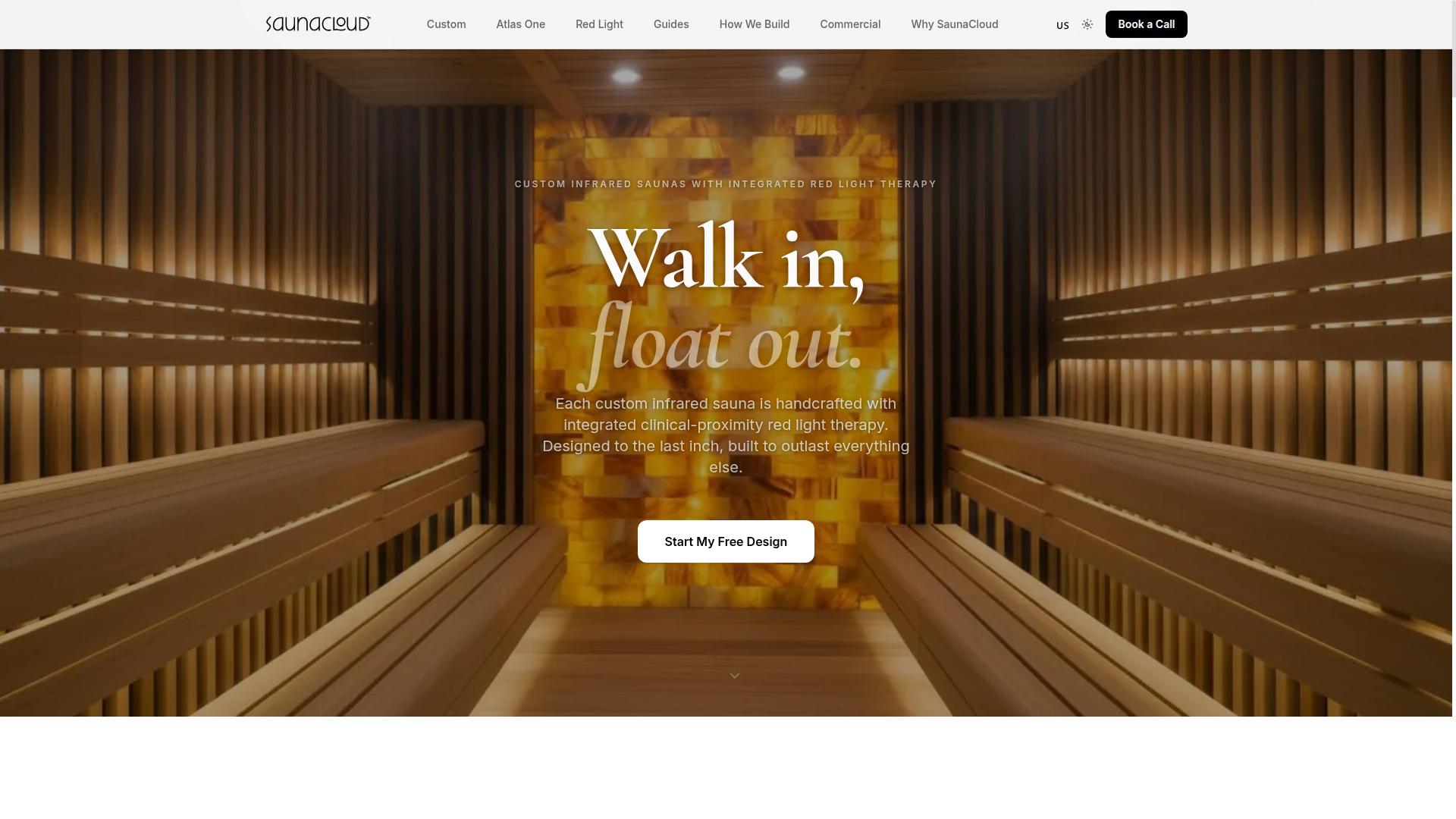
SaunaCloud's Atlas and Sierra custom infrared saunas integrate clinical-grade red light therapy and ultra-low-EMF heating.
Models are handcrafted in Diamond Springs, California, with VantaWave(r) carbon heaters. The company has served 3,000+ installations since 2014.
Every unit ships as a complete kit that includes all fasteners. A 7-year limited lifetime warranty backs each sauna.
Integrated Red Light Therapy at Clinical Proximity
SaunaCloud embeds 660 nm red and 850 nm near-infrared LEDs directly into the bench and backrest panels.
The LEDs are positioned 2-6 inches from skin contact points, matching clinical proximity standards. Users can toggle the lights independently from heat sessions via the control panel.
This dual-modality design supports both thermal therapy and light-based recovery in a single wellness ecosystem.
VantaWave Ultra-Low EMF Heating Technology
VantaWave(r) heaters emit under 3 mG EMF and typically below 0.5 mG at the user's seating position.
The heaters reach 190 degreesF surface temperature and emit at a 7.9 micron peak wavelength for optimal far-infrared absorption.
Clear-grade Western Red Cedar construction adds natural thermal properties without particle board or adhesives.
Wi-Fi Control and Custom Design Process
Owners use the SaunaCloud mobile app to schedule sessions, adjust temperature, and receive maintenance alerts from any location.
The custom ordering workflow includes a virtual sizing call, CAD layout approval, component fabrication, and white-glove delivery with video-assisted setup.
This process ensures each infrared cabin aligns with the user's space, whether for home spa use or commercial wellness environments.
2. Sunlighten
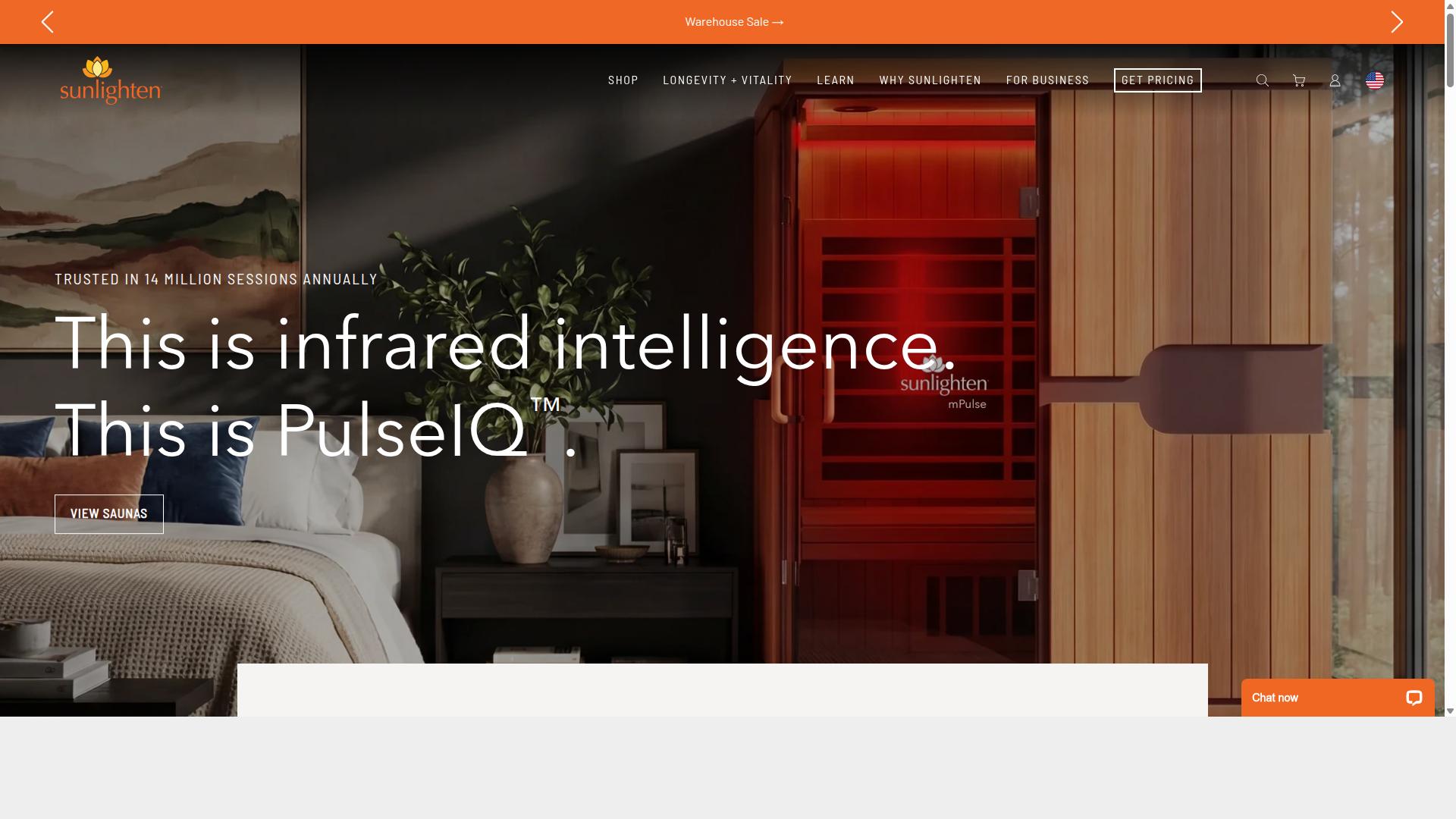
Sunlighten offers a range of infrared saunas with varying levels of smart features and heater technologies. Their lineup targets both residential and commercial users seeking flexible wellness solutions. The brand emphasizes spectrum-specific heating and modular design options.
Buyers evaluate Sunlighten models based on intended use, such as personal recovery or group sessions. Each collection addresses different temperature ranges and program flexibility. Clearlight customers often compare these choices when exploring infrared sauna alternatives for connected wellness.
Smart Sauna Features and App Integration
Sunlighten saunas include tablet-based controls and Bluetooth audio, but advanced health-tracking integrations vary by model tier. Users access preset wellness programs through the application interface. Audio streaming and chromotherapy options provide additional customization during sessions.
Typical functions include scheduling, program selection, and basic session monitoring. Wellness technology features differ across the mPulse, Amplify, and Signature lines. Buyers should verify real-time data accuracy with third-party testing before relying on health metrics.
App connectivity supports audio playback and light therapy adjustments. The system allows remote session activation on compatible models. Smart wellness users benefit from checking integration depth across different price points and configurations.
EMF Levels and Heater Specifications
Sunlighten advertises low-EMF heaters, yet published independent measurements differ across models and testing conditions. The mPulse collection uses SoloCarbon heaters that deliver multiple infrared wavelengths. Each model reaches different maximum temperatures depending on the heating technology.
Consumers measure EMF at the intended seating distance to confirm actual exposure levels. Heat therapy performance depends on peak surface temperatures and wavelength output consistency. Published specifications provide baseline guidance but require model-specific validation.
Independent verification remains advisable for each specific model under consideration. Surface temperature readings and EMF data should align with published claims. Infrared therapy users compare these measurements when evaluating sauna alternatives for daily wellness routines.
3. Clearlight
Clearlight markets connected infrared cabins with a focus on full-spectrum heating and optional smart controls. The brand positions its infrared therapy systems within the broader wellness ecosystem, emphasizing thermal therapy for recovery and health optimization. Infrared cabin users typically seek options that combine heating performance with modern connectivity features.
Clearlight cabins often appear in discussions of smart wellness device alternatives. The brand offers infrared sauna solutions that appeal to consumers exploring home spa setups and health monitoring capabilities. Wellness technology continues to evolve, with various manufacturers addressing user demands for connected therapy experiences.
Connected Wellness Capabilities
Clearlight cabins offer Wi-Fi scheduling and optional biometric add-ons, though exact sensor accuracy and compatibility lists should be verified. Typical integration points include mobile scheduling, software updates, and third-party heart-rate strap pairing for users interested in wellness automation.
Research suggests that health connectivity features help users maintain consistent recovery technology routines. Wellness platform integration varies across infrared cabin manufacturers, so buyers should confirm firmware support duration with each supplier before purchase decisions.
Smart wellness benefits from these connectivity options in several ways.
- Mobile-based session planning reduces scheduling conflicts
- Remote software updates maintain system performance over time
- Heart-rate monitoring supports biohacking and health optimization goals
Wellness intelligence continues to advance through these integration capabilities.
Therapy Integration and EMF Performance
Clearlight incorporates optional chromotherapy and red light panels; buyers are encouraged to request independent EMF and wavelength data. Feature sets should be confirmed against current model datasheets, as infrared therapy specifications can vary between production runs.
Experts recommend comparing published EMF values at multiple seating positions within infrared cabins. Red light irradiance measurements at 6 to 8 inches from skin provide practical benchmarks for therapy effectiveness assessment.
Heat therapy and connected recovery options continue to expand across the wellness network space. Smart health consumers benefit from reviewing wavelength specifications and electromagnetic field data when evaluating therapy alternatives for their wellness ecosystem needs.
How to Choose the Right Option
Selection criteria should align with specific health goals, installation constraints, and long-term support expectations.
Homeowners, clinics, and wellness centers each face unique decisions when replacing Clearlight systems with alternatives. The right choice depends on matching recovery technology features to actual needs rather than generic marketing claims.
Consider these five questions before making a final decision on any infrared sauna solution.
- What is your primary goal: recovery, pain relief, sleep improvement, or cardiovascular health?
- How much square footage and ceiling height are available in your space?
- Do you prefer red light integration at clinical distance?
- What is your EMF sensitivity threshold?
- Do you need Wi-Fi scheduling and data tracking features?
Homeowners typically prioritize compact infrared cabin designs that fit existing room layouts. They often focus on sleep improvement and stress reduction with simpler connectivity needs.
Clinics require more robust connected therapy options that support multiple users daily. EMF sensitivity matters more here because of varied patient profiles and longer exposure times.
Wellness centers need advanced wellness automation capabilities to manage scheduling across multiple rooms. They focus on cardiovascular health programs that can track progress over time.
SaunaCloud serves all three audiences with custom infrared saunas designed for recovery, pain relief, sleep improvement, stress reduction, and cardiovascular health. The flexible configuration process accommodates different space requirements and connectivity preferences.
Research suggests matching EMF sensitivity levels to specific device specifications prevents future issues. Users with higher sensitivity should prioritize low-EMF models during the selection process.
Data tracking needs vary significantly between personal use and professional settings. Wellness centers often require more sophisticated scheduling and monitoring features than individual homeowners need.
Final Verdict
SaunaCloud stands out for its factory-integrated red light therapy at clinical proximity and verified ultra-low EMF performance.
The brand uses VantaWave(r) heaters that emit under 3 mG EMF and often measure below 0.5 mG during daily operation. These heaters reach a surface temperature of 190 degreesF at a peak wavelength of 7.9 microns to deliver consistent far-infrared energy without high electromagnetic exposure.
Every model includes a 7-year limited lifetime warranty that covers the heaters, controls, and structural components. The warranty reflects in-house design and manufacturing of all core parts using kiln-dried Western Red Cedar with no particle board or veneers.
Red light panels are built into benches and backrests at distances of 2 to 6 inches, aligning with clinical research standards for proximity and dosage. This integration removes the need for external light devices and keeps the therapy within the heated envelope of the cabin.
Customers can schedule a showroom visit to experience the complete system or contact the brand directly for a custom quote that matches their space and wellness goals. The same approach applies when comparing VantaWave(r) performance against other infrared sauna options in the market.
Recommended Resources: